
If You Can’t Explain the Exercise, You’re Just Repeating It.

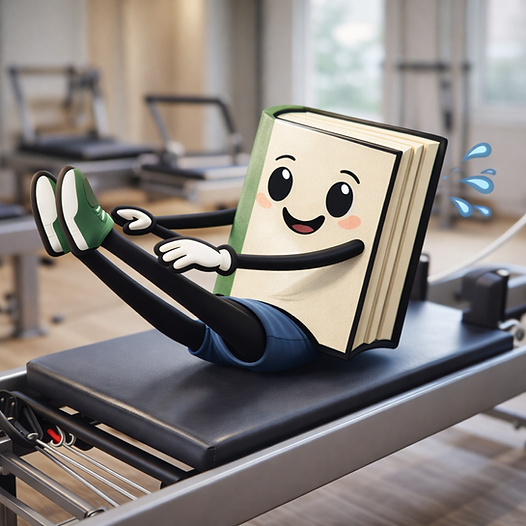
Why learning matters more than sweating
There’s a familiar feeling many people associate with a “good” workout: heavy breathing, burning muscles, and a sense of exhaustion that proves you worked hard. Sweat has become the unofficial badge of fitness success.
But at Elevate Pilates, we’ll say this plainly and without apology: sweat is not the goal. Understanding is.
If you can’t explain why you’re doing an exercise, what it’s meant to improve, and how it should feel in your body, then you’re not really training. You’re just repeating shapes.
And repetition without understanding has limits.
Movement without learning doesn’t last
Research in motor learning and rehabilitation consistently shows that intentional movement leads to better outcomes than automatic repetition. When the brain understands a task, the nervous system organizes the body more efficiently. This improves coordination, strength retention, balance, and long-term function.
In contrast, mindless repetition often leads to compensation. The body finds shortcuts. Stronger muscles take over. We feel tired, but we don’t necessarily get better.
This is why people can exercise for years and still feel stiff, unstable, or prone to pain.
As we explored in our May blog post, “Mindful Movement vs Misleading Media: The Fitness Industry’s Reality Check,” the industry often rewards appearance and intensity over education. Fast workouts, flashy exercises, and viral content look impressive but rarely teach people how their bodies actually work.
Pilates, when taught properly, is the opposite of that.
Why explanation changes everything
When an instructor explains an exercise clearly, something important happens:
You understand where the movement should come from
You learn what to relax and what to engage
You can feel when something is off and self-correct
You start noticing patterns in your own body
This turns exercise into skill-building, not just exertion.
Empirical studies in movement science show that internal awareness and external feedback improve motor control, especially as we age. This means learning doesn’t slow progress. It accelerates it.
At Elevate, we don’t explain exercises to sound technical or clever. We explain them so you can take ownership of your body.
What we see every day at Elevate
Many clients arrive with impressive fitness histories. They’ve done group classes, gym programs, online workouts, sometimes for decades.
And yet, we often hear the same sentence within the first few sessions: “I’ve done this exercise before, but no one ever explained it like this.”
One long-term client in her 50s shared that after years of Pilates elsewhere, she finally understood how to use her hips without gripping her lower back. Not because the exercise was new, but because the explanation was. Her chronic discomfort eased within months, not from doing more, but from doing less with more awareness.
Another client, a former athlete, admitted that slowing down felt frustrating at first. But once he understood why control mattered more than speed, his strength improved, and old injuries stopped flaring up.
These changes don’t come from sweating harder. They come from learning better.
The difference between being led and being taught
Many studios lead clients through sequences. Elevate teaches clients how to move.
That difference matters.
Being led means following cues without context. Being taught means gaining skills you carry with you beyond the studio. When learning happens, clients start asking smarter questions. They feel changes in daily life. Standing feels different. Walking feels lighter. Pain becomes information instead of something to push through.
This aligns with what research tells us about neuroplasticity: the brain continues to adapt at any age when learning is involved. Understanding fuels change. Repetition alone does not.
Why this approach is challenging (and worth it)
Learning requires patience. It asks you to slow down. It challenges the ego. It may even feel harder than doing something fast and familiar.
That’s intentional.
At Elevate Pilates, we don’t promise quick fixes or dramatic transformations. We promise clarity, consistency, and intelligent progress. We expect clients to engage, ask questions, and stay curious about their own bodies.
This is not passive fitness. It’s participation.
And yes, you will still sweat. But it will be a byproduct, not the measure of success.
The takeaway
If you can explain an exercise in your own words, you’re no longer dependent on cues or trends. You’re building a relationship with your body based on understanding, not force.
That’s how change lasts. That’s how pain reduces. That’s how confidence grows.
At Elevate Pilates, we believe learning is the real workout.
And once you experience that difference, it’s hard to settle for anything less.


Comments